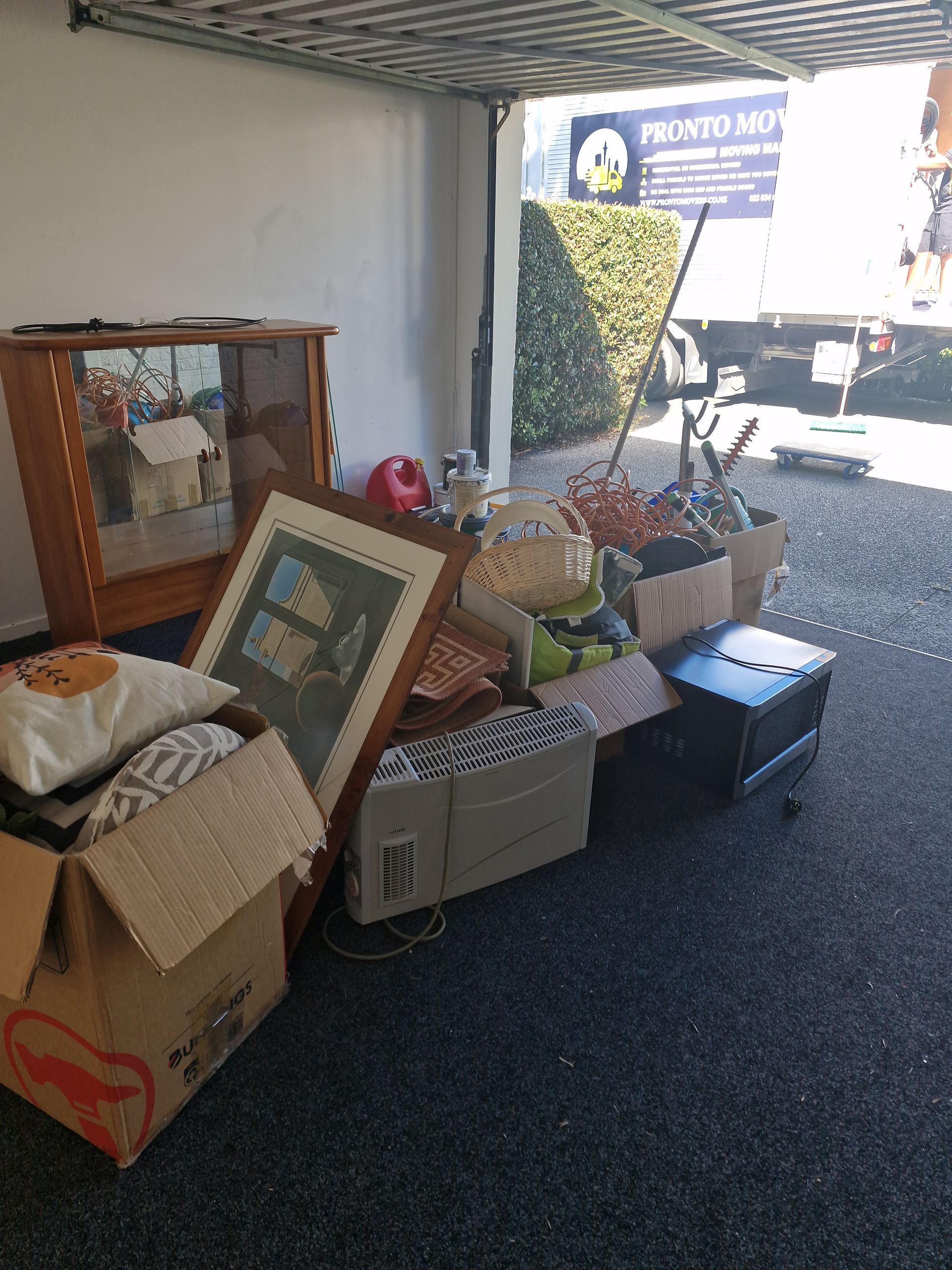
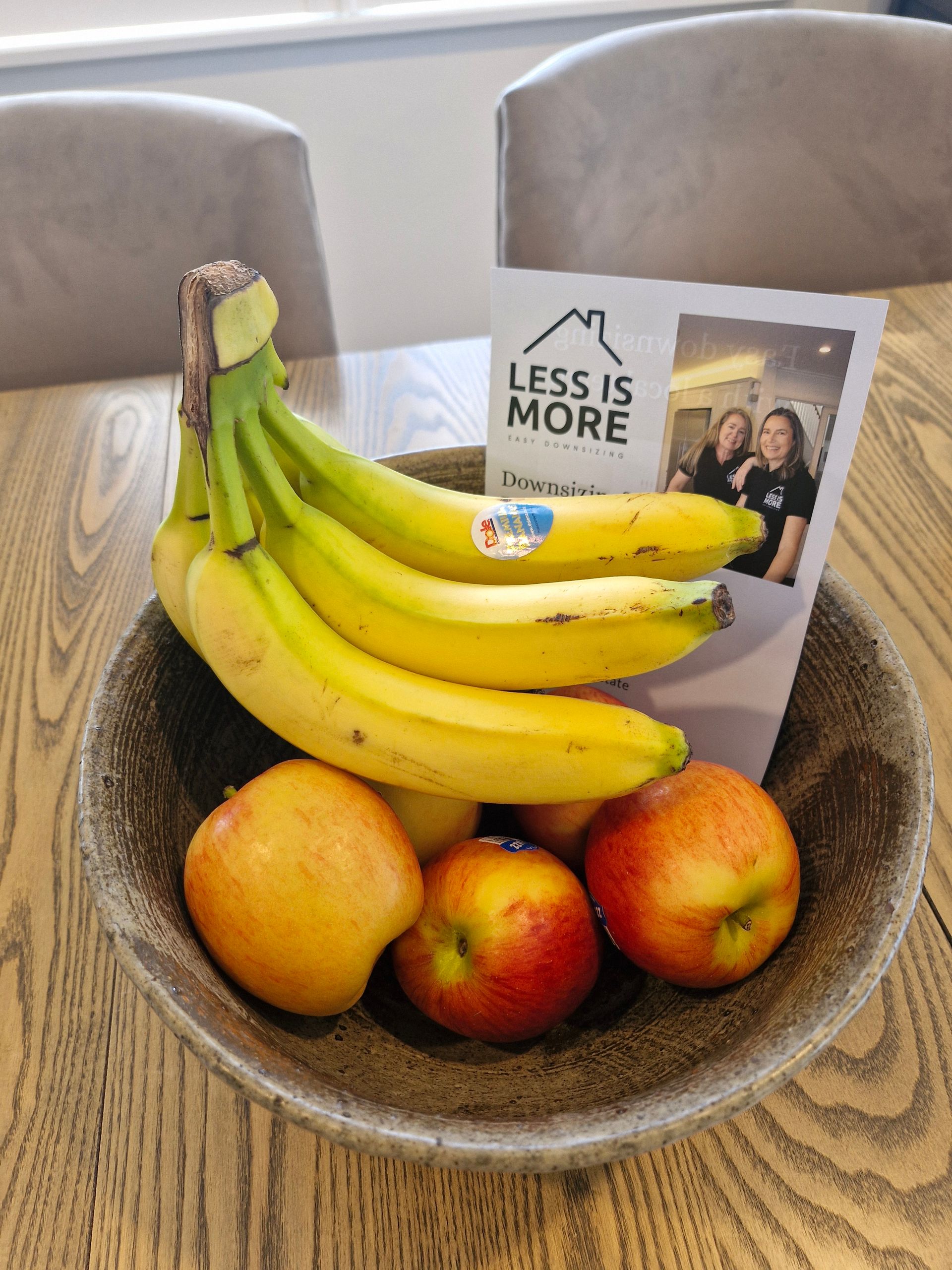
We don’t just declutter. We care where things go.
Responsible disposal is part of our service — even when it takes more time, more organisation and sometimes, a bit more money.
When we help someone downsize, declutter or move, we’re often dealing with decades of accumulated belongings. Some things have obvious value. Some can be passed to family or friends. Some can be donated to a charity. Others can be repurposed or given a completely new life. And then there are the things that are simply no longer wanted or usable. At Less is More, we take our responsibility for those belongings seriously and our goal is to keep as much as possible out of landfill.
We work hard to find the best destination for the things our clients no longer need — whether that means a charity donation, recycling, reuse or specialist disposal.
Donation isn’t the same as disposal
We love working with charities and community organisations, and where an item is genuinely suitable for donation, we’ll help get it there. But we also know that “take it to the op shop” isn’t always the responsible answer.
Charities don’t want to receive bags of items they can’t sell or use. In fact, After, a textile recycling organisation, reports that around 80% of textiles donated to New Zealand op shops can ultimately need to be redirected to landfill because they are unsuitable for sale. In Auckland alone, around 17,000 tonnes of clothing are sent to landfill each year. (after nz) So we try to be thoughtful about what we donate — and what we send somewhere else.
Finding the right home for the right thing
We separate belongings carefully and look for appropriate recycling and reuse options. In our storage facility (where we keep our recycled packing materials) we also have secure bins for each category of recycling and disposal - and we organise and co-ordinate distribution.
- Clothing, bedding and fabric that is no longer suitable for charity donation can be sent through specialist textile recycling services. After, for example, works to turn unwanted textiles back into raw materials such as recycled yarn rather than simply sending them to landfill. (after nz)
- Electronics and electrical items can go to specialist e-waste recyclers rather than into general rubbish.
- Batteries are separated for appropriate recycling.
- Confidential paperwork is securely destroyed rather than simply thrown into a rubbish bag.
- Digital devices and data need particular care, so we use appropriate data-destruction services where required.
- Other materials, including cardboard, polystyrene and certain household items, are separated wherever a responsible recycling pathway exists.
One of our Auckland recycling partners, Abilities Group, provides recycling services for e-waste, documents, batteries, cardboard and other materials, alongside secure document and data destruction. It is also a social enterprise with a strong employment focus, creating meaningful work opportunities for people with disabilities. (Abilities Group) And there’s a lovely added benefit: Abilities estimates that every tonne of end-of-life products it recycles avoids approximately 4.5 tonnes of CO₂ emissions. (Abilities Group)
Doing the right thing isn't always the easiest thing
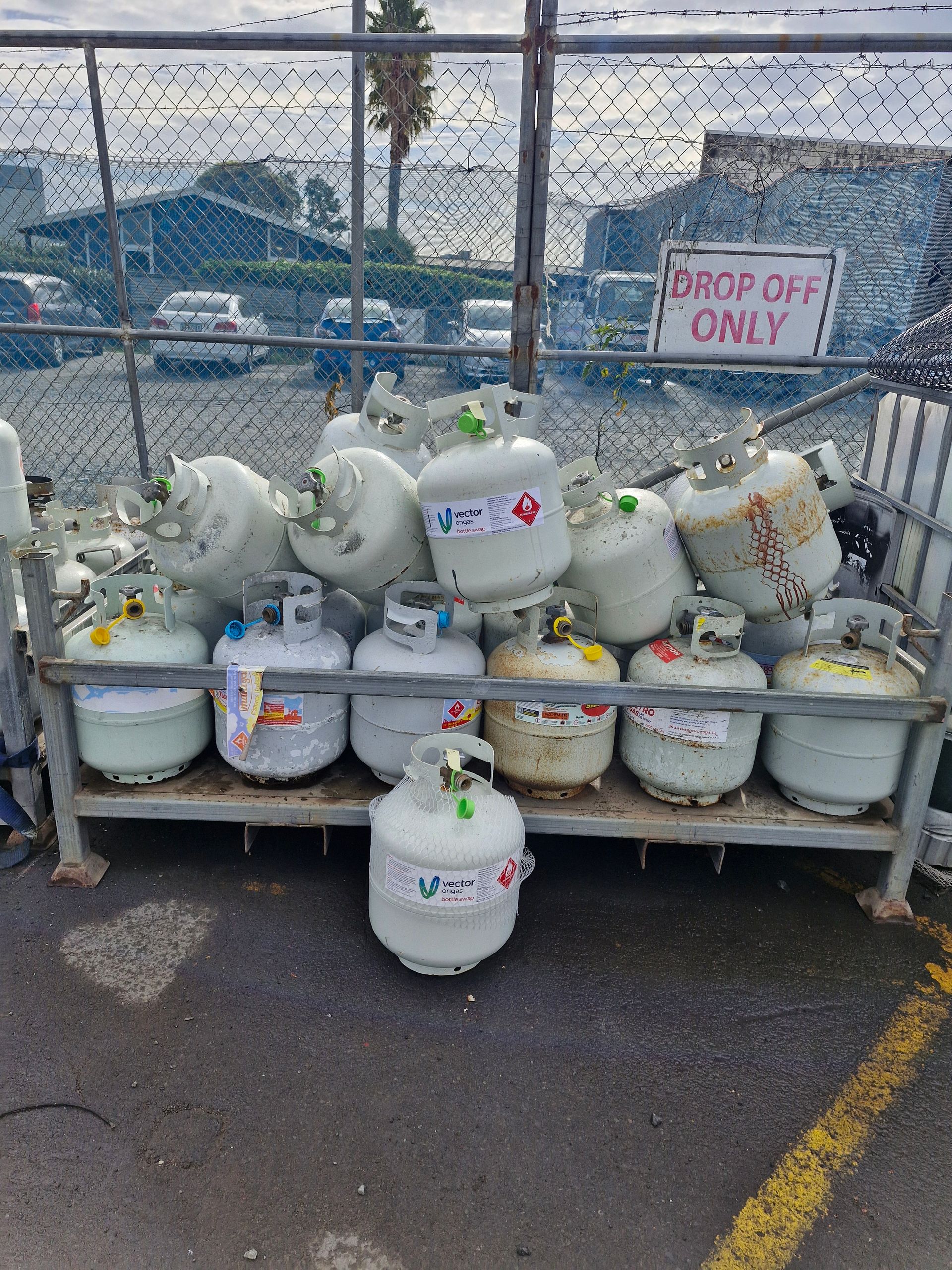
We’ll be honest: responsible disposal can be inconvenient and it can take considerably longer than simply loading everything into a trailer and heading to the transfer station - which is one of the reasons the world has the landfill problem that we do. Sometimes, despite our best efforts, there simply isn't a viable recycling, reuse or donation option. When that happens, we don't pretend otherwise. Some things do have to go to landfill, but we try very hard to make that the exception — not the default.
Responsible disposal means sorting items into different categories, making separate trips, booking specialist collections, paying recycling fees and us holding items until the right collection service is available.
And yes, sometimes it costs more
Responsible recycling and disposal can have a cost. There are no universal schemes or goverment incentives. For example, Abilities Group explains that its recycling charges help cover the cost of staff, premises, maintenance and operating expenses, while also supporting employment for people with disabilities. (Abilities Group) Specialist textile recycling involves collection and processing fees. Dismantling complex electronics devices safely requires expensive, labor-intensive manual processing and strict environmental compliance
We believe those costs are simply part of doing a job properly. We do pass recycling and specialist disposal costs on to our clients at cost, with no mark-up.
We think that's important. You should know what you're paying for, and you should know that we're not making money from your unwanted belongings.
Less stuff. More life. Less waste.
Downsizing is about letting go of things that no longer fit the next chapter of your life. But letting go doesn't have to mean throwing everything away and something that seemed like “rubbish” turns out to have another life after all:
- An old duvet becomes recycled fibre.
- A 1990s laptop becomes useful materials again.
- A box of paperwork is securely shredded.
- A piece of furniture helps create another home for people who need it.
- A donation helps a charity raise money.
That's what Less is More is about.
We can't promise that nothing will ever go to landfill. But we can promise that we'll think carefully about where your belongings go, do our very best to keep usable and recyclable materials out of landfill, and treat the things you've spent a lifetime collecting with respect.
Because less waste is better for our grandchildren and their children too.