The Surprising Psychology Behind Decluttering Our Homes
Why is it so hard to let go of things we no longer need? Discover the psychology behind clutter and practical ways to make decluttering and downsizing easier.
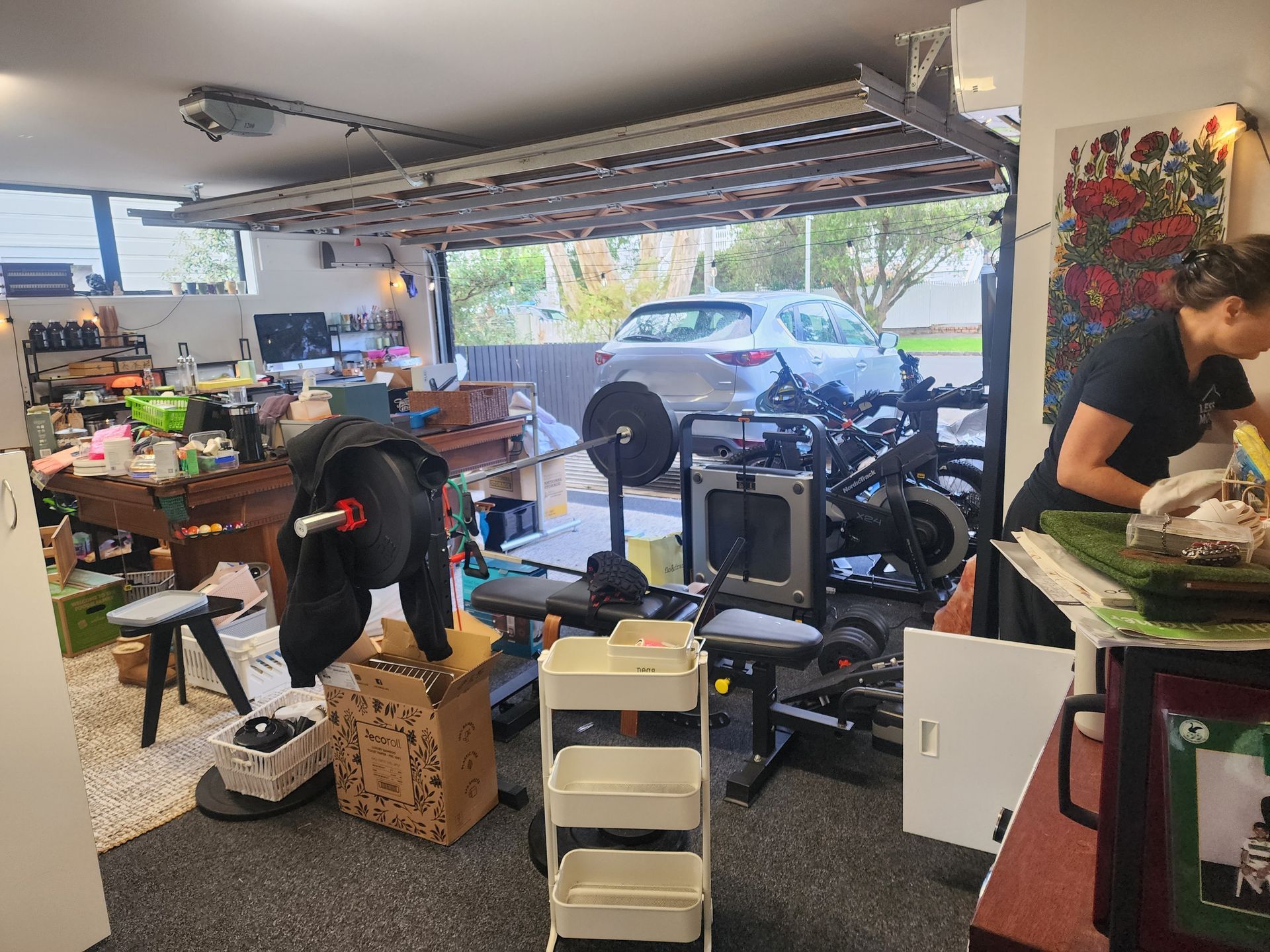
It's not just the stuff. It's the memories, the emotions and the little pieces of ourselves that we attach to it.
Have you ever picked something up while decluttering and found yourself completely unable to put it in the rubbish pile? Perhaps it's an old school exercise book, a chipped teacup, a collection of holiday souvenirs or a jumper you haven't worn in 20 years. You know you don't need it. You probably haven't looked at it for years. And yet, somehow, putting it in the donation box feels almost impossible.
At Less is More, we see this all the time. Whether we're helping someone downsize from the family home, sorting through decades of accumulated belongings or helping organise a home for a new phase of life, we know that letting go is rarely as simple as deciding what to keep and what to get rid of.
And there's actually some fascinating science behind why.
It's not just an object. It's a little piece of us.
In an opinion piece for The New York Times, neuroscientist Emily Falk explores why we find it so difficult to part with possessions, even when we know we no longer need them. Her research suggests that the parts of our brain involved in deciding what is valuable overlap with the parts that help us understand our sense of self. In other words, we tend to place greater value on things simply because they belong to us.
That old vase isn't necessarily worth anything, but it belonged to your grandmother. Those school reports might never be read again, but they remind you of your childhood. The dining table might be too big for your new apartment, but it's where the family gathered every Christmas.
The object becomes connected to our identity, our relationships and our memories. This helps explain why decluttering can feel surprisingly emotional. We're not always saying goodbye to a thing. Sometimes we're saying goodbye to a person, a place, a stage of life or a version of ourselves.
The fear of losing something
Another reason we hold on is something psychologists call "loss aversion". Essentially, we feel the pain of losing something more strongly than the pleasure of gaining something of similar value. So even when we're unlikely to use an item again, the thought of getting rid of it can feel much worse than the thought of keeping it. This is particularly noticeable when downsizing.
Suddenly, we're faced with the reality that the new home simply won't accommodate everything from the old one. There might be room for one favourite armchair, but not the entire lounge suite. A smaller kitchen means fewer cupboards. And that collection of beautiful serving dishes might not all make the cut.
It's easy to focus on what we're losing, rather than what we're gaining. At Less is More, we encourage people to think about what their new home and lifestyle will look like. What will you actually use? What will make you happy? What do you want to see around you every day?
It's about making room for the next chapter, rather than trying to squeeze the last 40 years into a smaller space.
Try looking at your belongings differently
Emily Falk suggests a simple but surprisingly effective change in perspective. Instead of asking: "Do I want to get rid of this?" Try asking: "If I saw this in a shop today, would I buy it?"
It's a clever little trick because it takes you out of the mindset of losing something you already own and puts you in the position of making a fresh choice.
Would you buy another set of six dinner plates when you already have enough? Would you choose that old vase for your new home? Would you pay to store those boxes of magazines?
Another useful question is: "If a friend came into my house and saw this, what would they think?"
Sometimes we need to borrow someone else's eyes. We can become so accustomed to our belongings that we no longer see them objectively.
This is where having someone alongside you can really help. Not someone who tells you what to throw away, but someone who can gently ask the right questions, offer a fresh perspective and help you work out what matters most.
Take a photograph. Keep the memory.
One of the most useful ideas in Falk's article is that taking a photograph of something can make it easier to let it go.
Research she refers to found that people were more willing to donate unwanted belongings when they were encouraged to photograph them first.
We think this is a particularly lovely idea. You don't necessarily need to keep every physical object to preserve what it means to you. Perhaps you have a collection of your children's artwork, a beautiful old piece of furniture that won't fit in your new home, or a box of souvenirs from family holidays. You don't necessarily need to keep every physical object to preserve what it means to you.
Take a photograph. Write down the story behind it. Share the memory with your children or grandchildren. You might even create a little album of the things you've loved along the way.
And if there's something particularly special, perhaps it's time to pass it on to someone who will enjoy it. A granddaughter might love that necklace, a friend might have room for the garden bench, or another family member might treasure the china that has been sitting unused in your cabinet.
The memory stays, even when the object moves on.
You don't have to do it all alone
One of the things we notice when working with clients is how much easier decisions become when there's someone else in the room.
Sometimes it's a family member who can remind you of the story behind an object. Sometimes it's a friend who can provide a little encouragement. And sometimes it's simply having someone neutral who isn't emotionally attached to the contents of the house.
Emily Falk also highlights the importance of social connection and positive encouragement. Sharing progress with others can help motivate us to keep going.
We see this in practice. Getting the first few boxes packed, filling a boot-load of donations or finally clearing that cupboard you've been avoiding can feel like a huge achievement. And it should! There is no prize for doing it all in one weekend. Small, steady steps are often the best way forward.
We always remind our clients that the first step is often the hardest. It can look a whole lot worse before it looks better, but that's usually a sign that things are finally moving.
Be more mindful about what comes in
There's another point in Falk's article that we think is worth remembering. It's not entirely our fault that we accumulate so much stuff. We're surrounded by advertising, online shopping, special offers and the temptation to buy things we don't really need. It's very easy for belongings to creep into our homes, but much harder to get them back out again.
A little more thought before buying can save a lot of sorting later. Before bringing something new home, ask yourself: Do I really need it? Do I have somewhere to put it? Will I still want it in a year's time?
Less coming in means less to deal with further down the track.
It's about keeping what matters, not getting rid of everything
At Less is More, we're certainly not in the business of getting rid of everything!
We love helping people rediscover special belongings, find new homes for things that are no longer needed and create spaces that feel comfortable, familiar and personal.
We know that some things are worth keeping, even if they're not particularly useful or valuable to anyone else. That's perfectly okay. The trick is to make those choices deliberately.
When you're downsizing, decluttering or dealing with a family home, try not to think of it as a giant exercise in throwing things away. Think of it as an opportunity to decide what you want to take with you into the next stage of life. Keep the things you love. Pass on the things someone else will enjoy. Photograph the things that hold memories. And give yourself permission to let go of the things that are no longer serving you.
The best memories don't live in the boxes in the garage. They live with you.
Inspired by the New York Times Opinion article by Emily Falk, neuroscientist, on the psychology of letting go of possessions and the way our brains attach value to the things we own.